
Elko County VINELink Coverage
Elko County’s official local route is Nevada S.A.V.E., short for Survivors, Advocates, Victims and Enforcement Notifications. Older pages and broad web searches may still use VINE or VINELink. The Elko County Sheriff links S.A.V.E. as the current state custody-status and notification system. It can report major status changes supplied by participating Nevada agencies. Coverage must still be checked in the live interface. The source material does not establish that every municipal, juvenile, out-of-state, or federal custodian sends data to it.
The system has two related jobs. It lets a user look for one named person in participating custody data, and it lets a user register for offered status notifications. Neither job creates an official Elko County release record. If a result says released or out of custody, the Elko County Detention Center or the Nevada Department of Corrections can explain what the event meant. A transfer can end one agency’s custody while another agency begins holding the same person.
The Sheriff’s inmate-search notice matters because the normal web and app roster was temporarily unavailable during the documented migration. A missing name on that page is therefore not evidence of release. For a county-jail case, pair S.A.V.E. with Detention, Sheriff Records, and the court record. For a sentenced state prisoner, pair it with the NDOC offender search.
Search an Elko County Inmate
Begin with the most exact identity details you lawfully know. Names can repeat, spelling may change, and aliases can produce a second result. Compare the agency, facility, identifier, and any demographic details shown. Never select a record on name alone. The following sequence keeps the specific-person VINELink inmate check focused on the right Elko County record.
- Open Nevada S.A.V.E. and choose the person or custody search offered by the live service.
- Enter the exact name. Add an identifier or available demographic filter when the interface offers one.
- Review each possible match, comparing the named agency, facility, and identifying details.
- Open the best-supported record and copy the exact custody-status wording and last-update information.
- If the record reports release or no current custody, contact the named custodian for release type, time, and receiving agency.
- If nothing appears, try a spelling or alias variant, then contact the last known custodian. A blank search is not conclusive.
A person held only in the Elko County Detention Center may have no NDOC result because county custody is not state-prison custody. Conversely, a person sentenced to NDOC may no longer belong in a county roster. The broader Elko County released-inmate search path explains how the Sheriff record and court disposition complete the county-jail timeline.
Elko County Release Status Fields
Read only the labels that the current record displays. S.A.V.E. is a changing interface, and the research does not support promising a fixed list of fields for every participating agency. A status-change entry shows that an agency transmitted an event. It may not explain the legal authority, the gate time, or whether another agency received the person.
| Field | How to use it |
|---|---|
| Name or identifier | Match it with known identity details before relying on the record. |
| Agency or facility | Shows which participating custodian supplied the status and who should confirm it. |
| Custody status | Reproduce the exact words. Do not turn “not found” into “released.” |
| Last update | Shows when the displayed information was refreshed, not always when the event occurred. |
| Notification choices | Identifies the changes and delivery channels currently offered for registration. |
For stronger state-prison evidence, the NDOC offender search may show status, location, offender number, sentence information, and release or parole details. An inactive released or discharged status, paired with a release row by offender ID, is strong public-system evidence. NDOC still warns that its portal is not an official record. Request the agency record when formal proof matters.
The live Nevada search shown below is the correct state-level starting point. The Nevada S.A.V.E. search screen reflects the service users should consult now.
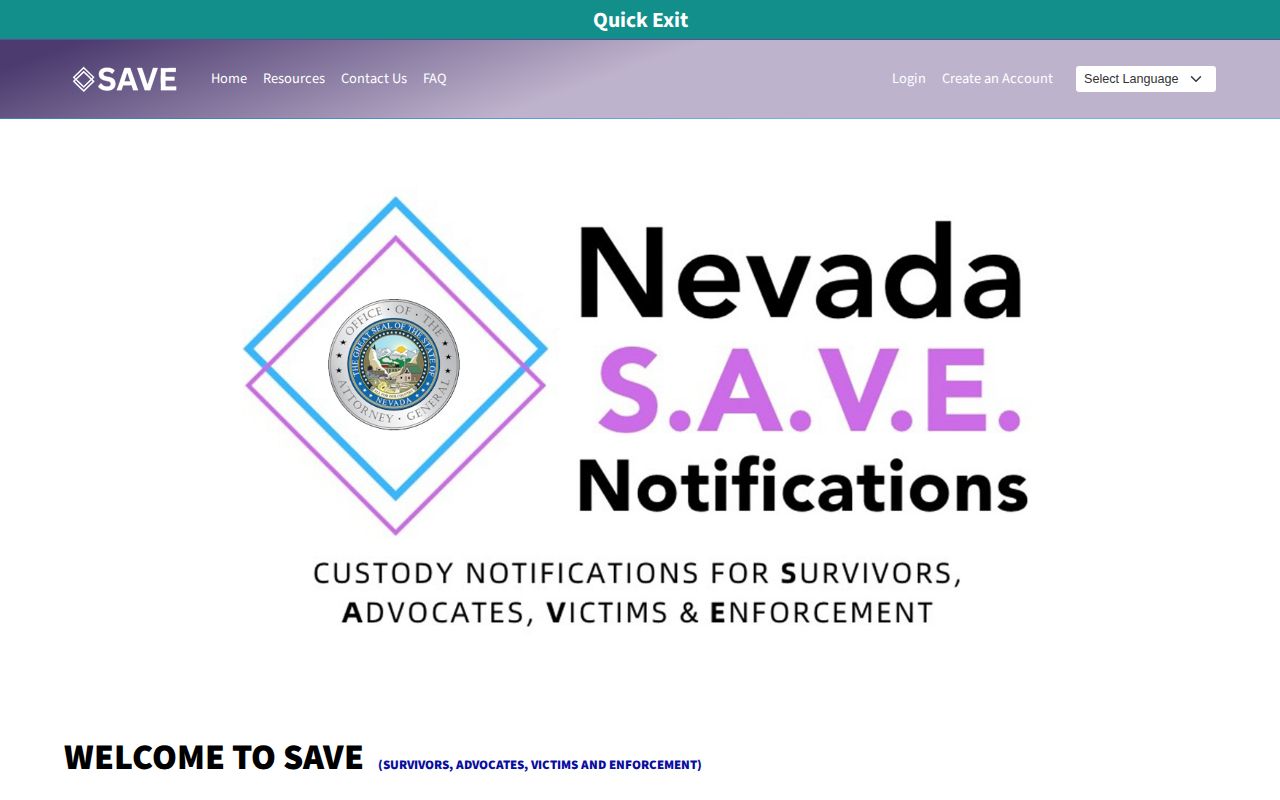
The screen supports a person-specific check, but the responsible jail, prison, or court must supply the lasting release explanation.
Note: A release alert is a lead to verify, while a closed booking entry or NDOC discharge record documents the event more fully.
Register Elko County Release Alerts
Registration begins from a matched record or the notification option shown by Nevada S.A.V.E. Choose only channels the current interface offers. Telephone, email, text, or another displayed method may be available. Enter the contact destination with care because an error can prevent delivery. Select the custody changes that matter, then complete the current confirmation process.
- Open the notification or registration option connected to the matched person.
- Select an offered telephone, email, text, or other delivery channel.
- Enter the destination and choose the available custody-change alerts.
- Complete the confirmation requested by the current S.A.V.E. interface.
- Save the registration details and the statewide support number for later reference.
- When an alert arrives, read or hear it fully and confirm exact facts with the custodian.
Do not follow old instructions that demand a four-digit acknowledgement PIN. That PIN belonged to the superseded VINE telephone workflow and is not documented for a current S.A.V.E. account. The current registration screen should control. It shows the choices users actually have now.
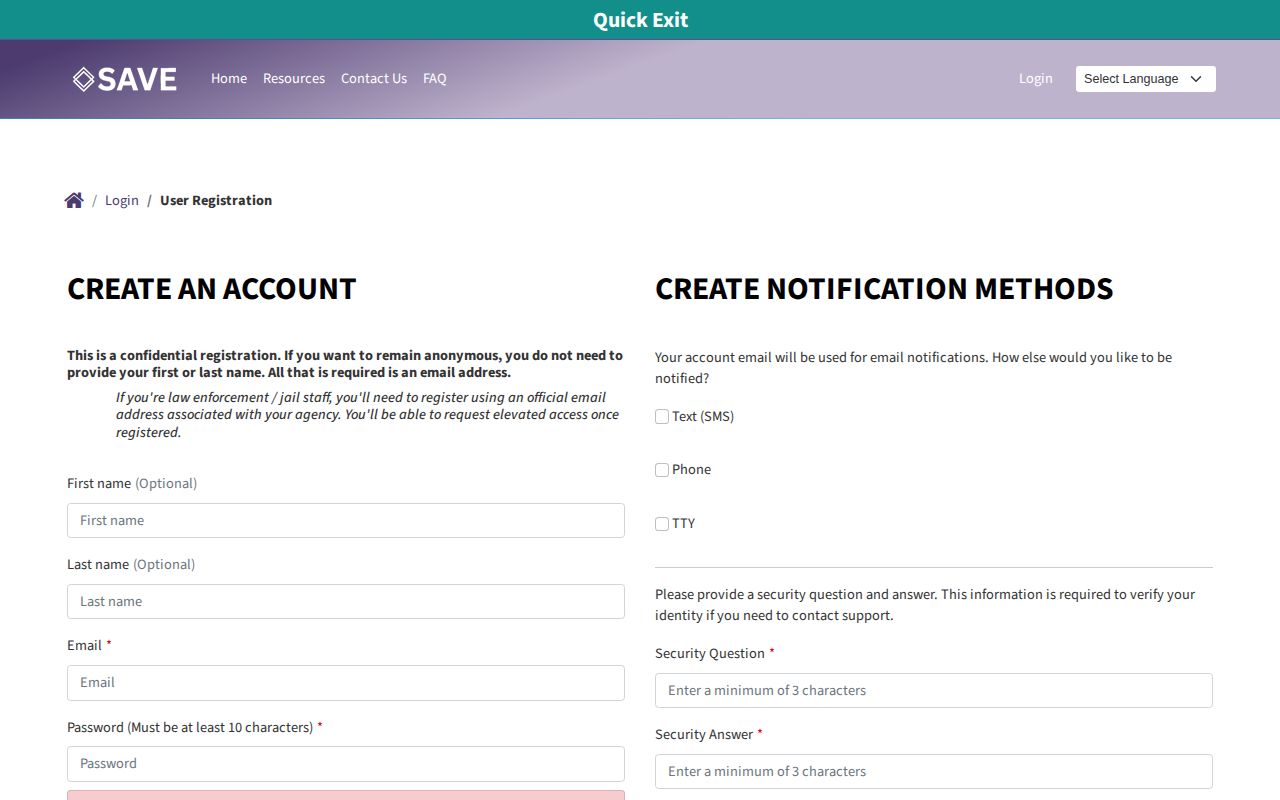
The registration image also shows why old VINELink instructions should not be copied into the current Elko County workflow.
Elko County S.A.V.E. Support
The local victim-notification layer is unusually clear. The Elko County Sheriff’s S.A.V.E. page names the replacement service, expands the acronym, links the state system, and publishes its round-the-clock number, 1-866-393-5445. That local agency page is better evidence for Elko County use than a generic national VINELink directory.
Keep the number with saved registration details. It supports the notification service, but it does not replace the jail, NDOC, or emergency services. If immediate safety is at risk, use the proper emergency channel. If exact release timing affects travel, pickup, or a court process, contact the custodian named in the result. Notification speed depends on agency data and cannot be guaranteed.
Confirm Elko County Release Results
Use the last known custodian to choose the next source. For the Elko County Detention Center, call Detention and ask Sheriff Records for the closed booking or jail movement entry. The court order can show authority, but the jail transaction supplies the physical exit and may name a receiving agency. A release from this jail may be bond, time served, court order, transfer, extradition, or another administrative exit.
For Nevada state prison, check NDOC by offender ID. If a parole hearing is the last known event, distinguish a calendar entry from a decision and an effective date. A grant does not prove physical departure. NDOC processing, an approved placement plan, detainers, and the effective date can intervene. Carlin Conservation Camp’s 2026 closure is also a transfer trap: NDOC said residents would be relocated before closure, so disappearance from Carlin does not establish release.
Federal and immigration cases sit outside the state notification path. The BOP locator covers federal prison records, while ICE’s locator addresses current immigration detention. A federal pretrial person may instead be under U.S. Marshals management. “Not in BOP custody” does not rule out state, local, immigration, or supervision status. Juvenile releases use DCFS, the Youth Parole Bureau, family, and court channels because public adult-style name searches are not promised.
If the last known event is a parole hearing, first identify the document type. A hearing schedule or monthly eligibility list shows consideration, not departure. A Board action may grant, deny, defer, revoke, or continue a matter. Even a grant must be matched to its effective date, NDOC processing, an approved placement plan, and any detainer. Use the S.A.V.E. event or NDOC release row to confirm that custody changed. If probation followed a suspended sentence or local jail term, an NDOC entry may never exist. The sentencing court, Sheriff release entry, and Division of Parole and Probation are then the right sources.
A sealed case can also disappear from ordinary public tools. Do not infer that custody never occurred, and do not attempt to bypass the seal. An authorized person should use the sealing order, counsel, or issuing court. The actual-custody release date and a later supervision discharge can both matter under Nevada’s sealing framework. S.A.V.E. is not a substitute for those records.
When an immigration detainer is mentioned, ask Sheriff Records to name the receiving agency. ICE’s Online Detainee Locator is a current-detention tool, not release history. No result may mean release, removal, transfer, recent processing, excluded data, or incorrect inputs. For federal charges, a person may remain under U.S. Marshals authority before ever entering BOP. Follow the custody chain instead of treating a gap in one system as an end to all custody.
- Release
- An end to one custodian’s hold, which may mean community departure or transfer.
- Discharge
- The end of a sentence or supervision status as recorded by the responsible agency.
- Detainer
- A request or hold from another authority that may control where the person goes next.
- Parole
- Conditional community supervision after a prison release decision and processing.
Note: A no-result search can reflect spelling, coverage, transfer, an update delay, or a person who is no longer displayed.
Public Record Search
Sponsored Results