
NYTC Youth Release Paths
The Nevada Youth Training Center is operated by the Nevada Division of Child and Family Services. DCFS describes it as a staff-secure correctional facility established in 1915 just outside Elko. It has seven housing units, capacity up to 160, and legislative funding for 60 youth ages 12 through 18. These figures describe the program, not a public roster.
A youth may return to an authorized guardian, enter youth community supervision, or move under another juvenile court or DCFS placement. Reentry planning is part of the facility program. The exact plan belongs to the youth’s case and authorized participants. A move from NYTC may therefore be release to a guardian, supervised transition, or another placement. It should not be reduced to an adult-style “released inmate” result.
| NDOC evidence | What it supports |
|---|---|
| New active institution | Transfer within state custody |
| Inactive released/discharged status | Departure from NDOC custody as coded |
| Release dataset row | Recorded release date and description |
| Parole Board grant | Release decision, not necessarily gate date |
Protect NYTC Youth Privacy
Juvenile identity, case, placement, and release information is commonly confidential. Public pages should not name a youth or imply that failure to find the youth in an adult system proves release. The absence may simply show that the wrong database was used. The Elko County Sheriff roster concerns adult detention, and NDOC’s offender search concerns adult state correctional custody.
Authorized family members should use direct DCFS and Youth Parole Bureau resources. Counsel can work through the juvenile case. Others may receive little or no person-specific information. That limit protects youth records and is not evidence that no placement exists.
Confirm an NYTC Release
Begin with the contact information already supplied to the youth’s authorized family. Case staff can explain the approved transition and reporting instructions within disclosure limits. If supervision follows, the Youth Parole Bureau family resources are the correct state route. Adult Parole and Probation is a separate system.
- Confirm that NYTC, rather than county juvenile detention, is the correct placement.
- Use the youth’s case identifiers and authorized relationship when contacting the facility.
- Ask whether the plan is return to a guardian, youth supervision, or another placement.
- Follow the written reporting instructions issued by DCFS or the Youth Parole Bureau.
- Use counsel or the juvenile court for lawful case-record questions that the facility cannot answer.
A youth leaving NYTC does not become an entry in Elko County’s adult release list. Nevada S.A.V.E. coverage should be checked in its current interface rather than assumed for every juvenile custodian. BOP, ICE, and NDOC adult searches also answer different populations. The Elko County release overview helps separate those systems.
NYTC and County Detention
NYTC is not the Elko County Juvenile Detention Center. The county facility is secure temporary detention for youth awaiting juvenile court action or short-term placement. NYTC is a state correctional commitment operated by DCFS. The distinction controls which agency holds the record and which staff manage release planning.
| Facility | Role | Release channel |
|---|---|---|
| NYTC | State youth correctional placement | DCFS and Youth Parole Bureau |
| County juvenile detention | Temporary secure county placement | Juvenile court and county probation |
| Adult county jail | Adult local custody | Sheriff detention and records |
| NDOC prison | Adult state sentence | NDOC offender and release records |
Words also differ. Youth supervision is not adult parole. A guardian return is not an adult jail release. A placement change may keep the youth within DCFS or court authority. Preserve the exact language used in the authorized case plan.
NYTC Family Contact Route
The official NYTC program and contact pages are the starting points. Different DCFS pages reviewed listed 775-738-7182 and 775-748-6200, so the current number should be rechecked before relying on either. That discrepancy should be stated, not hidden by selecting one number as permanent.
Ask only for information the caller is authorized to receive. Provide the youth’s case details and relationship, then follow identity checks. A public-record request cannot be used to bypass juvenile confidentiality. Counsel or the issuing juvenile court is the sound route when a disputed order, placement, or release term must be interpreted.
Nevada Youth Training CenterP.O. Box 459
Youth Center Road
Elko, NV
Verify current phone on the official DCFS contact page
View Official NYTC Information
The official DCFS program page documents NYTC’s youth correctional role and reentry focus.
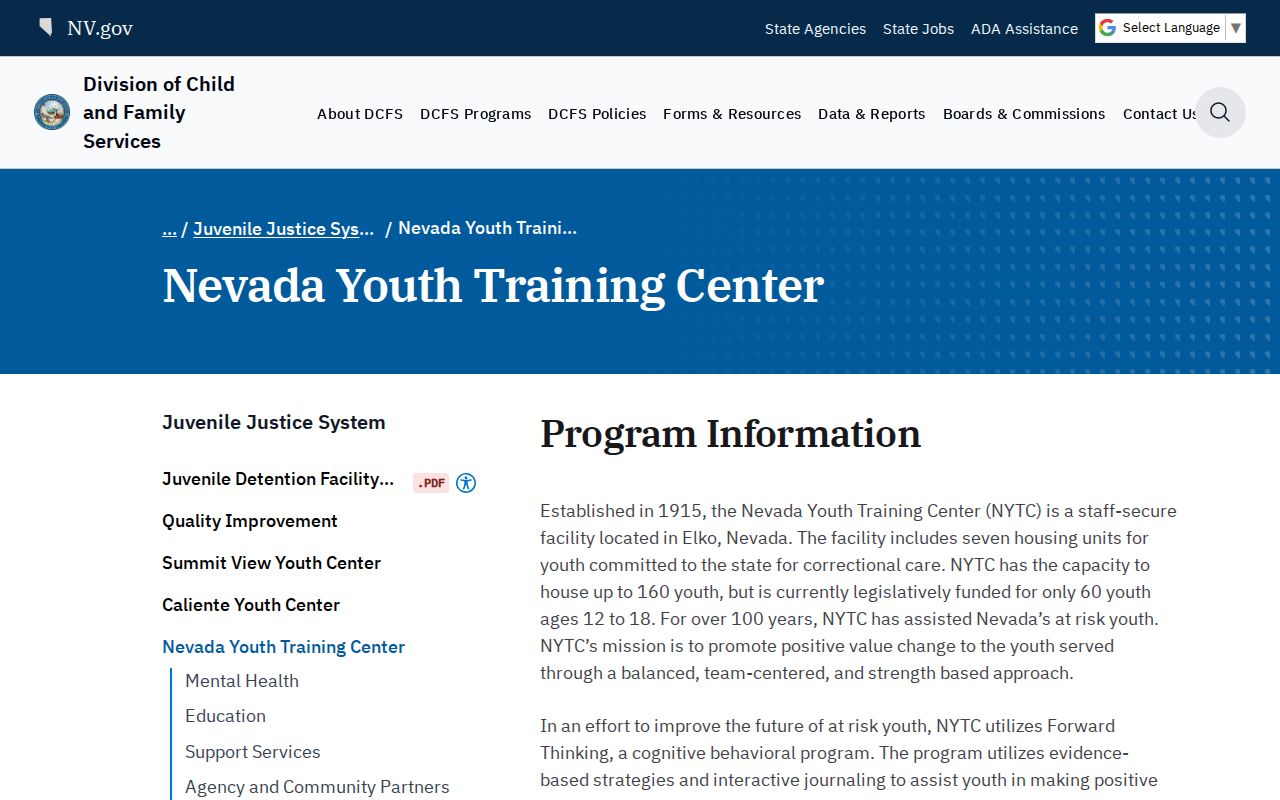
The captured source supplies facility context, not a public youth roster or person-specific release result.
Limits on NYTC Release Data
Public silence is not proof of custody or release. Juvenile systems intentionally disclose less person-specific data than adult rosters. A general program page can establish the facility’s role, housing structure, and reentry planning, but it cannot confirm one youth’s status.
Likewise, a family report should not be turned into a public roster entry. The best evidence for an authorized person is the written DCFS or court plan, the facility’s confirmation within lawful limits, and Youth Parole Bureau instructions when community supervision applies. A court-directed move to another placement is not the same as return home.
NYTC’s history and program details are useful context. They do not waive confidentiality. Keep adult Elko jail records, adult NDOC data, county juvenile detention, and NYTC records in their correct systems.
NYTC Reentry and Supervision
DCFS identifies reentry planning within NYTC programming. That work can connect the youth’s facility stay to an approved next placement, family plan, education, services, and youth supervision. The public program description does not reveal a named youth’s plan. Authorized participants should rely on the written instructions issued for that case and confirm any first reporting requirement with the Youth Parole Bureau.
An adult parole search is not a substitute. Nevada’s adult Division of Parole and Probation and the adult Parole Board address different people and legal processes. A youth may leave the physical NYTC campus while remaining under juvenile court or DCFS authority. The exact order and supervision terms show whether the move is a guardian return, community placement, or transfer.
- Reentry
- Planned transition from the facility to the next approved setting and services.
- Youth parole
- Juvenile community supervision handled through the Youth Parole Bureau.
- Guardian return
- A release plan placing the youth with an authorized parent or guardian.
- Placement change
- A move to another court-approved setting, which is not necessarily release from all authority.
When a date matters, ask the authorized agency contact what the date represents. An approval date, transport date, physical departure, and first supervision report may differ. Preserve the source and label for each one.